- Home
- Building Self-Esteem
- Emotional Healing
Emotional Healing: Old Wounds from the Past
Begin Your Journey of Emotional Healing
Welcome to the Self-Esteem Series, post Emotional Healing: Old Wounds from the Past.
If you have been exploring how to increase self-esteem, this post is the perfect next step.
Past experiences and emotional wounds can influence your confidence, decision-making,
and leadership. This post will help you begin understanding and processing past
experiences, so you can continue building strong, resilient self-esteem.
Why Emotional Healing Matters
Emotional healing is essential because unprocessed experiences from the past can
shape how we see ourselves today. For women entrepreneurs, unresolved emotions can
impact Confidence when making tough decisions, the ability to handle challenges or
conflict, and your sense of self-worth and leadership presence.
By recognizing how these past experiences affect you, you open the door to clarity,
resilience, and personal growth.
Recognizing the Impact of Past Experiences
Before you can begin to heal, it is important to notice how past experiences influence your
present.
Try reflecting on questions like "Which past experiences often resurface in moments of self-
doubt?"
"How do these memories influence my decisions or confidence?"
"What emotions tend to repeat when I face challenges?"
Simply acknowledging these patterns is a meaningful first step in the journey of emotional
healing.
First Steps Toward Emotional Healing
You don’t need to fully resolve your past to start feeling empowered. Taking small,
steps makes a big difference. Some ways to begin include:
Journaling about experiences and emotions without judgment
Noticing triggers and how they influence your thoughts and feelings
Practicing self-compassion when difficult memories arise
Reflecting on lessons learned rather than assigning blame
Beginning to process past experiences is a powerful first step toward stronger self-esteem,
greater confidence, and emotional resilience.
Empowering Yourself in the Healing Process
Growth comes from understanding. Emotional healing is gradual, and every
small step counts. Take in moments to notice and reflect is progress, consistency matters
more than speed; healing is a journey. By treating yourself with patience and compassion,
you reinforce the foundation of trust in yourself and self-worth.
A Compassionate Reminder as You Continue
As you close this post, emotional healing is about creating safety within yourself, one
moment at a time. The fact that you are willing to reflect, notice, and care for your
inner world already speaks to your strength. Healing unfolds at the pace your
nervous system can support, and every small act of compassion you offer yourself
matters.
Trust that even self-awareness creates change. You are learning to carry yourself
with more understanding, and that alone is a powerful foundation for lasting self-
esteem.
Continue the Journey

Congratulations on taking this step in
your Self-Esteem journey!
In this post, you have explored the
importance of emotional healing and
taken the first steps toward
understanding past experiences that
may have been holding you back from
building your self-esteem. While fully
resolving old wounds takes time and
support, simply beginning to process
them is a powerful move toward greater
confidence, resilience, and self-worth.
Each post in the Self-Esteem series builds on the one before, helping you
strengthen your self-esteem and trust in yourself as you grow personally and
professionally. If you want personalized guidance to take these steps even further,
my email series will walk you through the process in a supportive, step-by-step way.
Every small step you take toward understanding
yourself builds lasting confidence and self-worth.
Reflection: Take a Small Step Today
Before you finish this post, take a moment to reflect; write down one past experience that
still influences your confidence or decisions. Second, notice the emotions that arise without
judging yourself. Third, identify one small action you can take today to respond differently
or nurture yourself.
Remember, every small step counts, and you are moving closer to stronger self-
esteem and personal growth with each one.
What Emotional Healing Really Means (Without the Pressure)

Emotional healing begins when you turn toward what you have been avoiding,
with steadiness and self-trust.
If the phrase emotional healing feels vague, uncomfortable, or even unnecessary,
you are not alone. Many capable, intelligent women have learned to rely on logic,
discipline, and action to move forward and those skills matter.
At its core, emotional healing is simply recognizing how past experiences influence
present reactions. It is noticing patterns: why certain situations trigger self-doubt,
tension, or hesitation, even when you are competent and prepared. Ignoring these
patterns does not make them disappear; it often causes them to surface as stress, burnout,
or self-criticism.
Healing is about increasing self-awareness so you can respond instead of react. When
emotions are processed rather than suppressed, mental clarity improves, decision-making
becomes steadier, and confidence feels less forced.
When emotions are processed rather than suppressed means giving yourself
permission to notice and feel your emotions instead of pushing them away or
pretending they aren’t there. Processing emotions allows you to understand why you feel
a certain way and respond in a healthy, constructive manner.
For example, if you feel hurt by a colleague but ignore the feeling and keep it bottled
up, that’s suppressing emotions. Over time, those unprocessed feelings can lead to
stress, self-doubt, or even resentment. Processing that same emotion might look like
taking a moment to acknowledge your hurt, reflecting on why it affects you, and deciding
on a small, intentional step to respond or release it. This practice helps you grow self-
awareness, emotional resilience, and confidence.
You don’t need to “believe” in emotional healing to benefit from it. You only need a
willingness to observe yourself and choose a more supportive way forward.
Small Steps to Process Your Emotions
1. Feeling hurt by a colleague’s comment
A small, intentional step could be writing down your feelings in a journal, taking a few
deep breaths to release tension, or calmly talking with the colleague to express your
perspective. You’re not suppressing the emotion, you’re acknowledging it and choosing
a thoughtful way to respond or let it go, rather than letting it simmer inside.
2. Feeling anxious before a big presentation:
Instead of ignoring the anxiety or distracting yourself, take a small, intentional step like
practicing your talk in front of a mirror, doing a 5-minute grounding exercise, or talking it
through with a supportive friend. You acknowledge the anxiety while actively managing
it, instead of letting it control your thoughts.
3. Frustration after a disagreement with a partner or friend:
Rather than bottling up the frustration, you could pause and write down what triggered
your feelings, take a short walk to clear your mind, or schedule a calm conversation later
to express your perspective. This way, the emotion is processed rather than suppressed.
4. Sadness from an old memory resurfacing:
Instead of pushing the feeling away, you might take a small step, such as turning on
relaxing instrumental music or the sound of doves singing, and allow yourself a few
minutes to reflect, journal what the memory brings up, or practice a self-compassion
exercise. This honors the emotion while helping it move through you without getting
stuck.
Gentle Support on Your Journey to Self-Trust
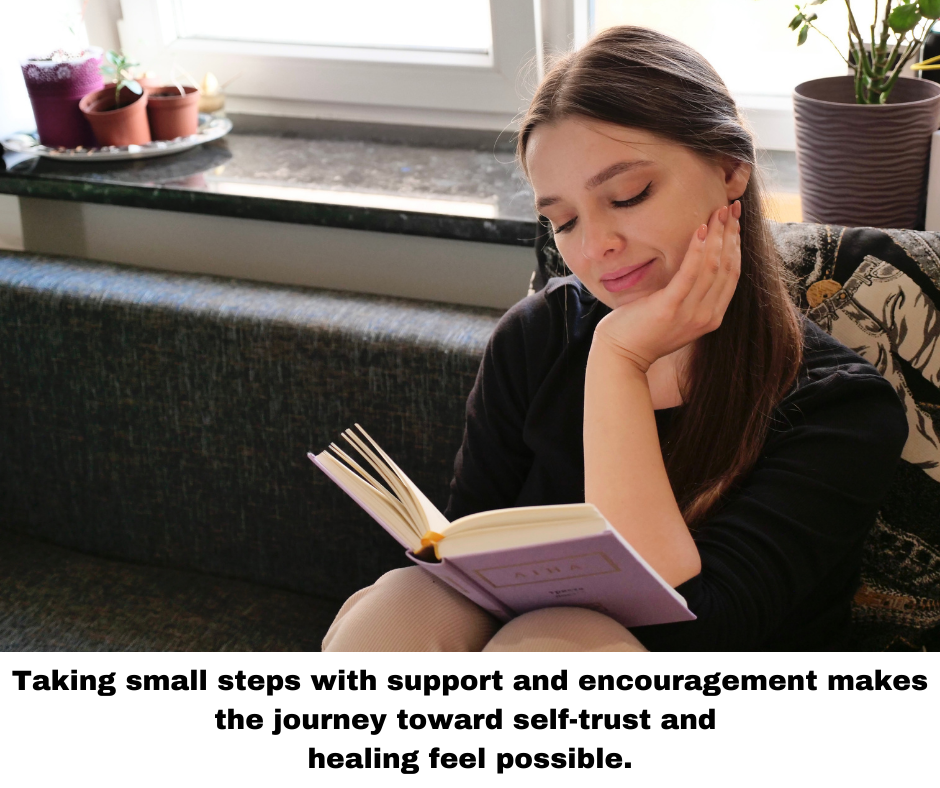
As you take these small steps toward healing and self-trust, know that you are not
alone. I have guided many women through this process, and I will be here to offer
support and encouragement every step of the way.
When you are ready, continue to the next post or join Mind Your Potential
for gentle support on your Confidence and Inner Authority journey.
The Next Read:
If you’re ready to continue strengthening your self-esteem, the next post in the series, How
to Build Self-Esteem, will guide you through practical steps to grow confidence and self-worth.
→ Read Next: How to Build Self-Esteem: A Guide for Women Entrepreneurs
🌿 Gentle Support for Your Self-Esteem Journey
If this post resonated with you and you’d like continued guidance, you’re warmly invited to join my
email series.
You’ll receive gentle reflections, practical tools, and encouragement to help you build self-esteem,
process emotions, and strengthen self-trust; one step at a time. There’s no pressure and no
overwhelm, just thoughtful support to walk with you as you grow.
Join the email series and continue your journey with calm, clarity, and confidence.
👉 Sign up below to receive your first message.
🌿 Gentle Support for Your Confidence & Inner Authority Journey
If these posts have resonated with you and you’d like a gentle way to continue, you’re warmly invited to join my email series.
When you subscribe to the Confident Woman Circle, you’ll receive a free printable guide that brings together the most important insights from my blog series, including:
- 1. Self-Confidence Series
- 2. Confident Woman Series
- 3. Self-Esteem Series
- 4. Inner Authority Series
This companion guide is designed for readers who have intentionally moved through the series and are committed to building real, lasting confidence.
If you have completed Posts 1–4, this guide brings everything together into one clear, cohesive framework.
Inside, you will find key reflections, reminders, and core principles from each part of the series, carefully organized to help you integrate what you have learned at your own pace.
✨ How to use the guide
For the most supportive experience, I recommend reading each series in order (Series 1–4) and each post in order. Each series builds intentionally on the one before it, creating a steady progression from confidence and self-esteem into deeper self-trust and inner authority.
By joining the email series, you will also receive:
- Gentle reflections and encouragement
- Practical tools you can apply in daily life
- Ongoing reminders to trust yourself and honor your inner guidance
There’s no pressure and no overwhelm, just thoughtful support as you continue growing with clarity, calm, and confidence.
👉 Sign up below to receive your free guide and your first email.